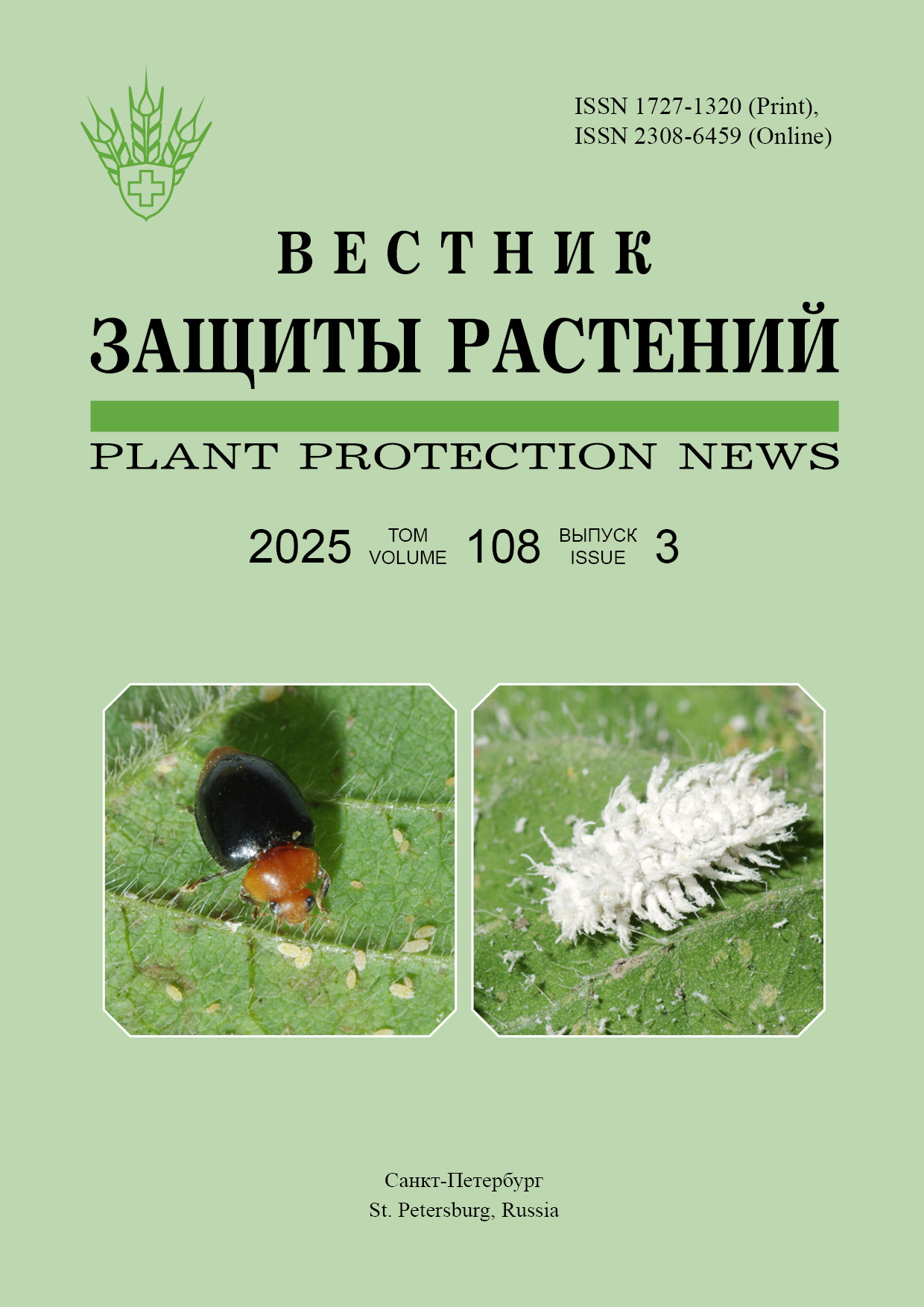
A novel approach of using Cryptolaemus montrouzieri (Coleoptera: Coccinellidae) in greenhouses of botanical gardens
Keywords:
cold-tolerant crops, Cryptolemus, mealybugs, Pseudococcidae, tropical plants, perennial control programsAbstract
Mealybug infestations remain a significant challenge in botanical garden greenhouses. Conventional summer deployment of the mealybug-feeding Cryptolaemus montrouzieri (Coleoptera: Coccinellidae) often proves ineffective. This study aimed to evaluate the feasibility of using adult, cold-resistant Cryptolaemus cultures during winter and spring to suppress early mealybug outbreaks. Laboratory cultures were established from wild specimens collected along the Black Sea coast of the Caucasus. The field experiments were conducted in two tropical greenhouses at the Peter the Great Botanical Garden (St. Petersburg, Russia). Populations of mealybug Planococcus ficus (Hemiptera: Pseudococcidae) and the predator’s larvae were monitored on seven model plant species. In the “Tropical Fruit Plants” greenhouse, experiments were conducted on Coffea arabica, Mangifera indica, Tectona grandis, and Theobroma cacao. In the “Large Palm Greenhouse,” the trials involved Combretum fruticosum, Ptychosperma elegans, and Cedrela glaziovii. Results demonstrated that cold-tolerant Cryptolaemus individuals could reproduce at 17–18 °C. Predator’s larvae, observed from January to March, effectively suppressed mealybug population growth during spring. This suppression created favorable conditions for pest management in the subsequent summer. A long-term program utilizing cold-resistant Cryptolaemus cultivars allowed maintaining the mealybug populations at levels not causing significant damage to the plants, indicating a sustainable and effective biological control strategy for greenhouse environment.